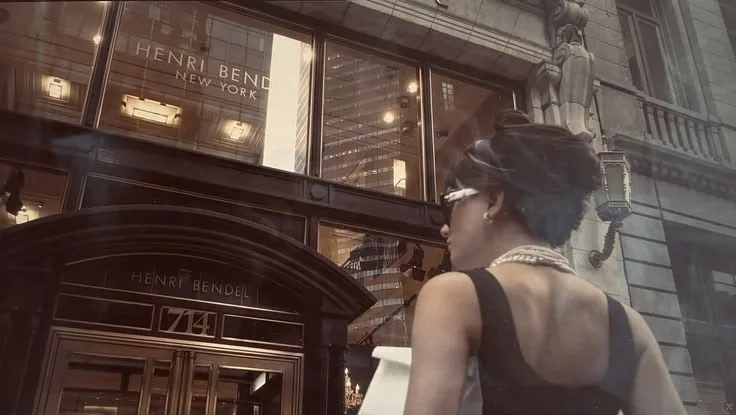
When money can buy almost anything, what remains truly rare?
By Merie Medici
Luxury once meant having more. Today, at the highest level, it may mean needing less. As craftsmanship, privacy, time, provenance and human connection become increasingly scarce, a new hierarchy of desire is emerging.
There was a time when luxury announced itself.
A logo on a handbag. A watch beneath a cuff. A chauffeur waiting outside a hotel. A penthouse above the city. A private jet on the tarmac.
Luxury was, in part, a language of visibility. It told the world that you had arrived.
But something has changed.
The world's wealthiest consumers can still acquire the rarest diamonds, the fastest cars and the most extraordinary houses. They can commission a yacht that exists nowhere else, reserve an entire hotel, fly across continents for dinner and acquire a work of art before most people have heard of the artist.
And yet the most sophisticated expression of wealth increasingly looks nothing like wealth.
It may be a beautifully cut jacket without a visible label. A centuries-old chair in a contemporary room. A watch recognized only by collectors. A week spent somewhere without a photograph. A house designed so carefully that its architecture appears inevitable. An object repaired rather than replaced. An afternoon with nowhere to be.
The paradox of modern luxury is this:
The more money can buy, the less impressive money itself becomes.
So what happens to luxury when abundance becomes accessible, information becomes instantaneous and status can be manufactured in seconds?
The answer may be that luxury is returning to its oldest definition.
Not expense.
Rarity.
But rarity, in 2026, means something much more profound than a high price.
It means time.
Knowledge.
Authenticity.
Craftsmanship.
Privacy.
Access.
And, increasingly, the freedom to choose less.
THE END OF “EXPENSIVE”
For decades, the luxury industry operated on a remarkably successful equation:
Price + scarcity + brand = desire.
The equation still works.
But it no longer works alone.
Luxury houses have become global cultural institutions. Their products are photographed, copied, discussed and distributed at extraordinary speed. A handbag that once communicated membership in a rarefied world can now be recognized almost everywhere.
Digital culture has transformed aspiration.
A consumer no longer needs to enter a Paris boutique to know what the world's most desirable objects look like. A collector in Seoul can follow a Geneva auction in real time. A client in Dubai can discover an emerging Italian designer through a screen. A teenager can identify a heritage watch from across a restaurant.
Luxury has become more visible precisely as genuine exclusivity has become harder to maintain.
This creates a peculiar problem for an industry built on desire:
If everyone knows what luxury looks like, how do you make luxury feel rare?
The answer is not necessarily to make it more expensive.
It is to make it more meaningful.
THE QUIET REVOLUTION
“Quiet luxury” became fashionable because it captured something real: a rejection of obvious status signaling.
But the phenomenon is deeper than beige cashmere, discreet tailoring and minimalist interiors.
Quiet luxury was the beginning of a larger cultural correction.
Consumers began asking different questions.
Who made this?
How was it made?
Where did the material come from?
Will it last?
Does it have a story?
Will I still want it in twenty years?
And perhaps the most revealing question of all:
Would I want it if nobody knew I owned it?
That question separates consumption from connoisseurship.
A status object is designed to be recognized.
A collector's object is designed to be understood.
The difference may be invisible to everyone except the person who owns it.
THE LUXURY OF KNOWING
In an age of infinite information, knowledge has become surprisingly exclusive.
Anyone can search for the world's most expensive watch.
Far fewer people understand why a particular movement matters.
Anyone can enter an auction catalogue.
Far fewer people can recognize the significance of provenance.
Anyone can walk into a luxury hotel.
Far fewer understand the architectural philosophy, the history of the property or the craftsmanship behind its interiors.
This is why the next generation of luxury may increasingly belong to the connoisseur.
The connoisseur does not necessarily want the most expensive object.
They want the right object.
They know the difference between a famous name and a meaningful one. They understand materials, provenance, construction and history. They can appreciate something that has no obvious status value.
This is luxury as cultural capital.
And unlike financial capital, it cannot simply be transferred.
You have to learn it.
TIME: THE ULTIMATE UNBRANDED LUXURY
There is another commodity becoming increasingly difficult to purchase:
time.
We live in a world of extraordinary convenience and extraordinary acceleration. Messages arrive instantly. Cars drive themselves. Artificial intelligence can produce an image, summarize a book, translate a conversation and generate a strategy in seconds.
Efficiency has never been greater.
And yet many of the world's wealthiest consumers increasingly value experiences that are deliberately inefficient.
A long lunch.
A handmade object.
A private garden.
A remote journey.
A house built slowly.
A watch whose mechanism takes hundreds of hours to finish.
Why?
Because slowness has become evidence of human attention.
A machine can make something instantly.
A master artisan may spend weeks making something that looks simple.
The apparent inefficiency is precisely the point.
Luxury is increasingly found in the things that refuse to be rushed.
THE HUMAN HAND
This may explain why craftsmanship has become one of the most powerful stories in contemporary luxury.
For centuries, luxury was fundamentally a celebration of human skill.
The jeweller.
The tailor.
The watchmaker.
The cabinetmaker.
The embroiderer.
The glassmaker.
The architect.
Industrialization changed the equation. Scale created accessibility, consistency and extraordinary commercial power.
Now technology is changing it again.
Artificial intelligence can generate almost infinite variations of images, designs and ideas. Automation can reproduce objects with extraordinary precision.
The result is an unexpected premium on imperfection.
The irregularity of a hand-finished surface.
The tiny variation in a piece of glass.
The evidence that someone sat at a bench and made a decision.
In a world increasingly populated by things produced without human hands, the human hand itself becomes part of the luxury.
The future may therefore belong not to the perfect object, but to the object whose imperfections prove that someone cared enough to make it.
WHEN PRIVACY BECOMES WEALTH
Perhaps the clearest sign of luxury's transformation is the growing value of privacy.
For generations, wealth was associated with being seen.
Today, extreme wealth increasingly enables something else:
not being seen.
The private residence does not necessarily need to be spectacular from the street.
The hotel suite does not need to be photographed.
The journey does not need to be posted.
The restaurant does not need to appear on a list.
The party does not need a press release.
The ultimate privilege is increasingly the ability to disappear from the attention economy.
This is why remote destinations, private villas, discreet hospitality, members' clubs and highly personalized travel have become so powerful.
The new luxury traveller is not necessarily asking:
“Where can I go that everyone wants to go?”
They are asking:
“Where can I go where nobody can find me?”
THE ARCHITECTURE OF RESTRAINT
The same transformation is visible in the homes of sophisticated collectors.
The traditional luxury interior announced itself through abundance: marble, chandeliers, precious materials, oversized rooms and layers of decoration.
Today, some of the most compelling private residences operate according to a different principle.
Space.
Light.
Silence.
Materials that age beautifully.
Furniture with provenance.
A view that requires no decoration.
The house becomes less a display of wealth than an environment for living well.
The most expensive element may be something no contractor can install:
a sense of calm.
Architecture, at its highest level, has always understood this.
The purpose of a great building is not necessarily to impress you.
Sometimes it is to make you feel something you cannot quite name.
That is an increasingly sophisticated form of luxury.
THE COLLECTOR REPLACES THE CONSUMER
The distinction between consumer and collector may become one of the defining cultural shifts of the next decade.
Consumers ask:
“What should I buy?”
Collectors ask:
“What deserves to exist in my life?”
The first question is transactional.
The second is philosophical.
Collectors understand that the objects surrounding us eventually become a portrait of who we are.
A watch says something.
A chair says something.
A painting says something.
A library says something.
So does the absence of all of them.
This is why luxury is increasingly intersecting with art, architecture, design, heritage and culture.
The richest object in a room may not be the most expensive.
It may be the one with the most compelling story.
THE NEW STATUS SYMBOL: DISCERNMENT
For much of modern history, status depended on recognition.
Today, status increasingly depends on discernment.
It is the difference between saying:
“I can afford this.”
and:
“I know why this matters.”
That distinction changes the luxury business fundamentally.
The next generation of affluent consumers may be less impressed by scale and more interested in specificity.
Not the largest house.
The best architect.
Not the rarest handbag.
The most interesting provenance.
Not the most expensive hotel.
The most extraordinary sense of place.
Not the newest watch.
The one with a story worth telling.
The premium is moving from quantity to quality, from visibility to intimacy, from ownership to experience.
THE AI QUESTION
And then there is the question that may define the next era of luxury more profoundly than any trend forecast:
What happens when creativity itself becomes abundant?
Artificial intelligence can generate an image in seconds that would once have required days of work. It can write, design, compose, personalize and simulate.
For luxury, this presents both an extraordinary opportunity and an existential challenge.
If almost anything can be generated, what becomes genuinely scarce?
The answer may be the things technology cannot manufacture simply by producing more of them.
Provenance.
Human experience.
Heritage.
Trust.
Physical presence.
The signature of an individual maker.
The memory attached to an object.
The story of where it came from.
The relationship between collector and creator.
AI may therefore accelerate an unexpected luxury revival.
The more synthetic the world becomes, the more valuable the authentic may feel.
The luxury object of the future may need to prove not simply that it is beautiful, but that someone was there.
THE LUXURY OF ENOUGH
There is a moment in every cycle of consumption when abundance begins to lose its magic.
The first beautiful object is exciting.
The hundredth is not.
The first extraordinary journey is transformative.
The twentieth can become exhausting.
The first home represents freedom.
The fifth can become maintenance.
At some point, wealth creates its own question:
How much is enough?
The new luxury consumer may therefore be defined not by acquisition but by selection.
Knowing when to stop.
Knowing what matters.
Knowing what not to buy.
That is a profound shift.
Because if luxury once represented the ability to have anything, perhaps its next chapter will represent the ability to choose almost nothing.
SO, WHAT IS LUXURY NOW?
Ask a CEO and the answer may be craftsmanship.
Ask a designer and they may say creativity.
Ask an architect and they may say space.
Ask a hotelier and they may say privacy.
Ask a collector and they may say provenance.
Ask a wealth adviser and they may say time.
They are all describing the same thing from different directions.
Luxury is becoming less about the object itself and more about the conditions surrounding it.
The time required to make it.
The knowledge required to appreciate it.
The access required to obtain it.
The story required to understand it.
The privacy required to enjoy it.
And the freedom required not to need it.
That is why the future of luxury will not be defined simply by higher prices.
It will be defined by higher meaning.
THE RAREST THING IN THE WORLD
Imagine two people entering the same room.
One owns everything.
The other knows what matters.
Which one is richer?
Perhaps the answer is no longer obvious.
Because the great luxury of the modern age is not unlimited consumption.
It is freedom from consumption.
Freedom from noise.
Freedom from urgency.
Freedom from imitation.
Freedom from the need to be seen.
And, ultimately, freedom over one's own time.
Money can buy access to many of these things.
But money alone cannot create taste.
It cannot manufacture memory.
It cannot instantly produce mastery.
It cannot guarantee a meaningful life.
And it cannot make a mass-produced object genuinely rare.
That is why the most interesting luxury of the future may be surprisingly old-fashioned.
A thing made by hand.
A place untouched by crowds.
A conversation that never becomes content.
A home that feels like home.
A watch repaired rather than replaced.
A table surrounded by people you love.
An hour with nowhere else to be.
The world has spent decades making everything faster, bigger, louder and more accessible.
Luxury is beginning to move in the opposite direction.
Toward the rare.
Toward the real.
Toward the human.
And perhaps that is the ultimate definition of luxury in the twenty-first century:
Not having everything. Having what cannot be replicated—and having the time to appreciate it.
— Merie Medici